Potential Pedestrian & Bike Design Considerations
- Sidewalks
- Crosswalks and mid-block crossings
- Bicycle or shared lanes
- Pedestrian refuges or bump outs/curb extensions
- Parallel corridors enhancements
 US 27 Complete Street Study
nearly a third of serious injuries involved pedestrians or bicyclists, who are more vulnerable due to limited protection. The goal is to improve safety and accessibility for everyone using a Complete Streets approach. The study includes identifying short- and long-term safety upgrades and adding infrastructure to support walking, biking, and public transit.
Complete streets are designed with the safety and comfort of everyone in mind —whether they’re walking, biking, driving, or taking transit. The way a complete street looks and functions can change depending on the surrounding area, who is using the street, how they travel, and how the street fits into the overall transportation network.
Want to learn more? Explore the KYTC Complete Street Manual.


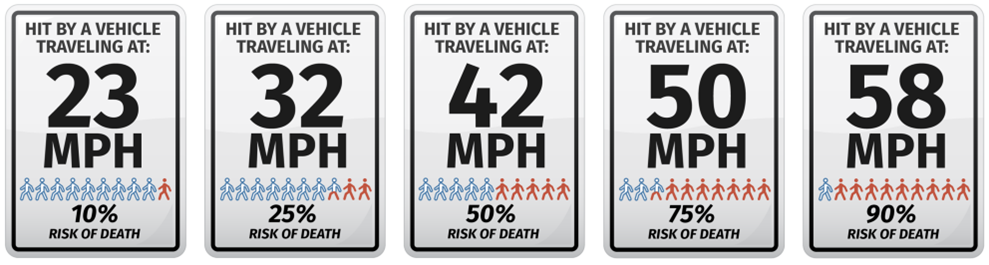
Speed and crash severity are directly related. The higher the speed, the increased probability of injury or fatality in both car and non-car users. The below graphic shows the risk of death for a pedestrian or bicyclist when hit by a vehicle at different speeds. Pedestrians and bicyclists have little defense in vehicular crashes that is why they are Vulnerable Road Users.
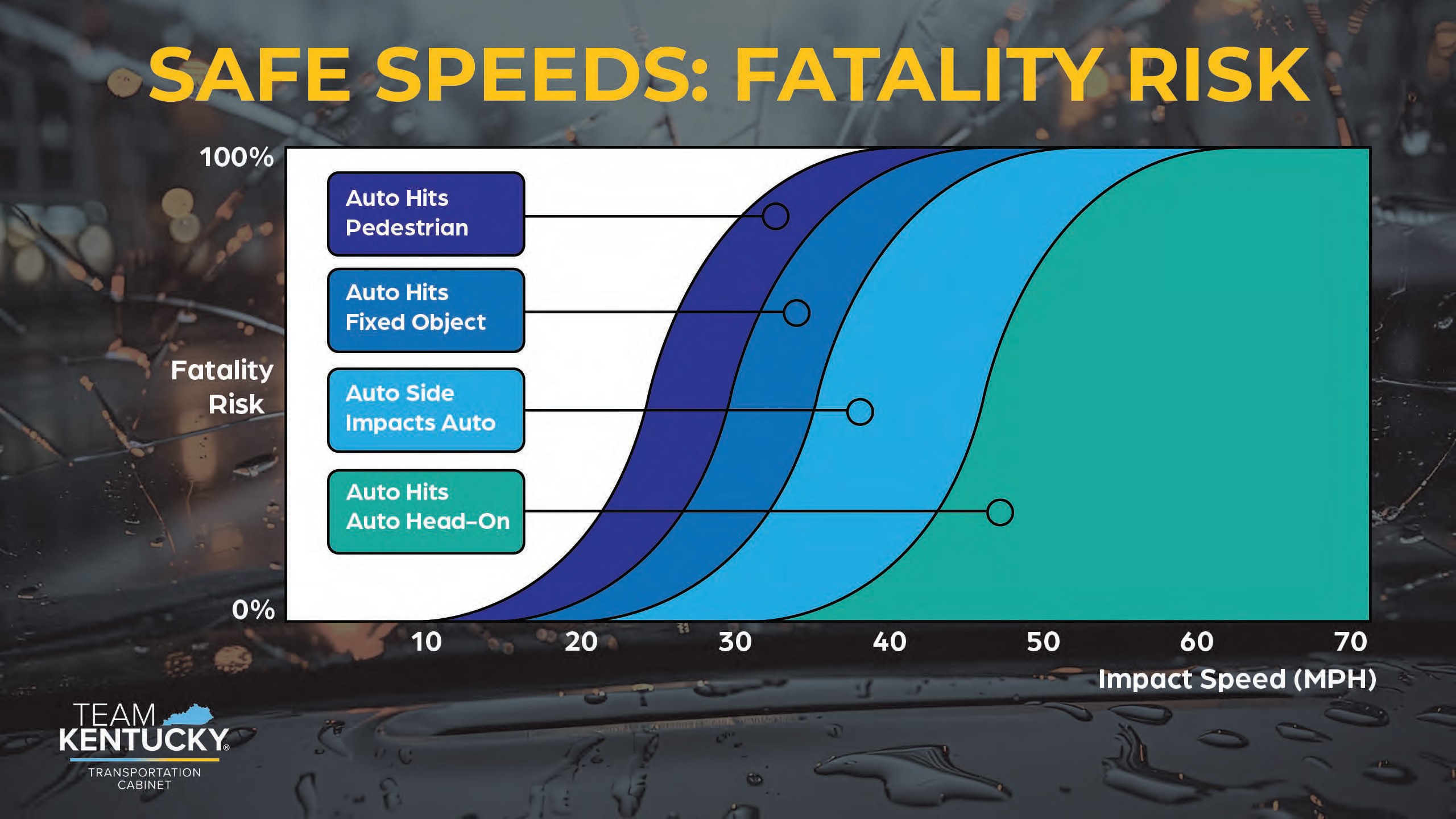
Speed influences crash severity on vehicular crashes also. The below graphic shows the risk of a fatal crash for other vehicular crash types.
Conflict points are the points where two vehicles or a vehicle and a pedestrian or cyclist can potentially collide with each other. These are typically at a road intersection or crosswalk.
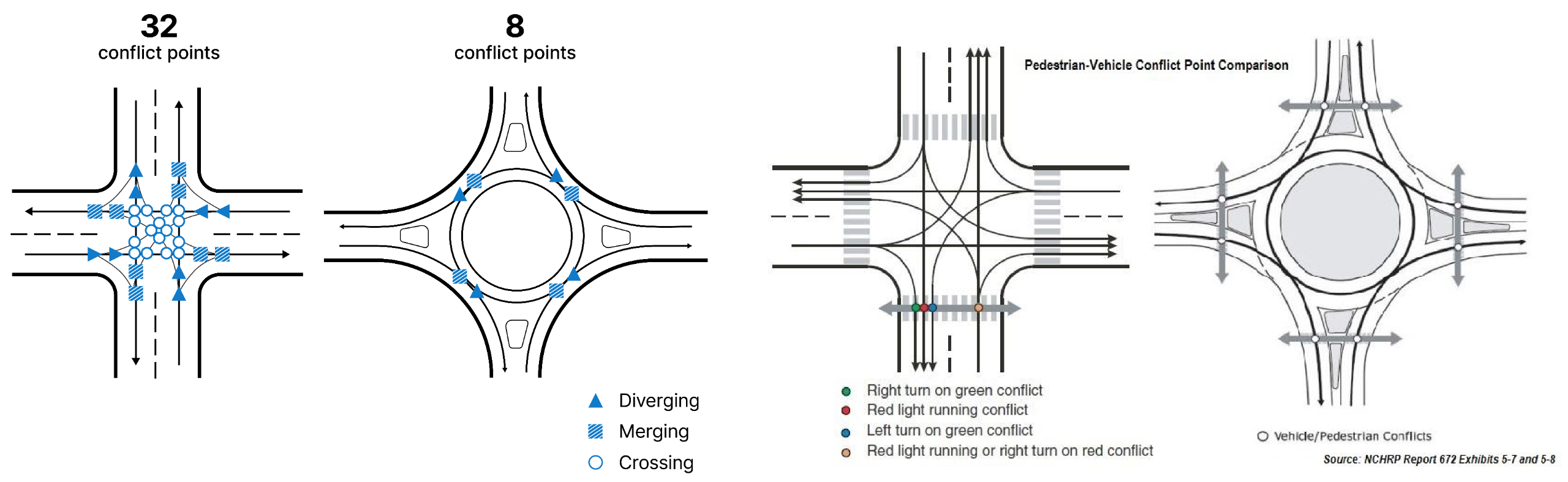
Crossing conflicts have a higher probability of fatal and serious injuries. Eliminating conflicts of any type and/or changing the conflicts to merge or diverge movements helps in reducing crash severity.
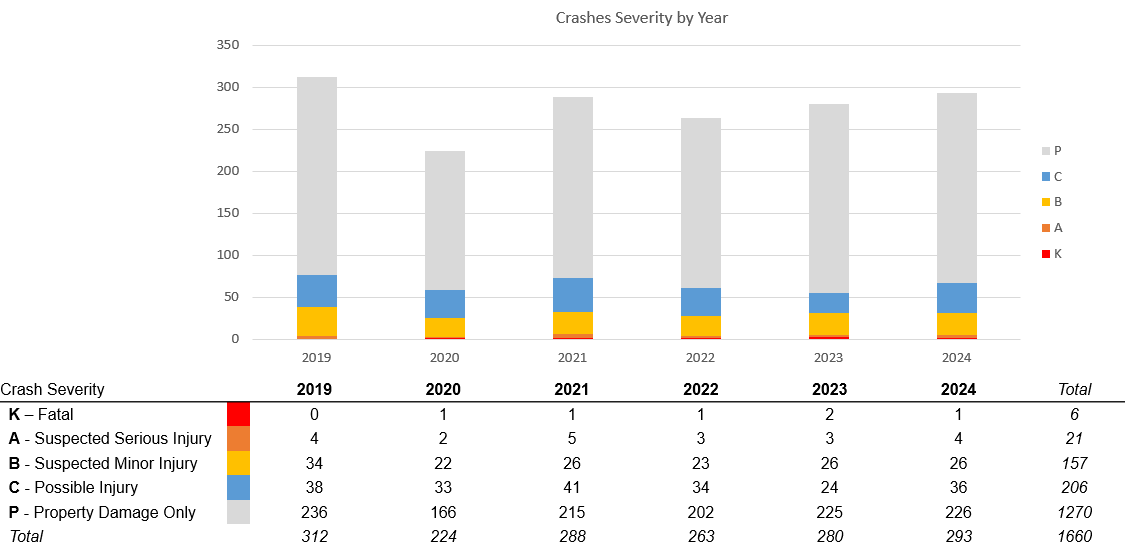
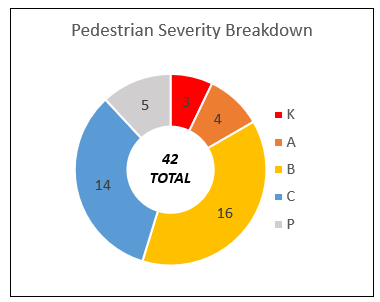
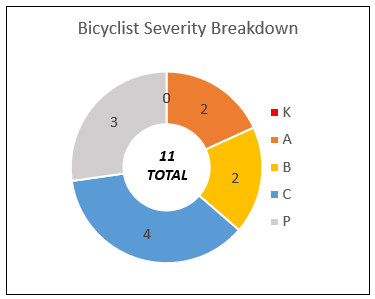
Fatal and serious injury crashes occur consistently over the past five years along the corridor with an average of one fatal and four serious injury crashes each year. These crashes, especially of the higher severity are not just vehicular focused – as half of the fatal crashes (3) are pedestrian crashes and approximately 30% (6) of the serious injury crashes are pedestrian or bicyclist crashes. The severity breakdown for pedestrian and bicyclist crashes is higher due to the lack of protection for these users when be struck by a vehicle.
One fatal injury, a pedestrian struck by a vehicle, has occurred on this corridor this year (2025).
Approximately 35% of the roadway segments and 52% of the intersections have positive Excess Expected Crash (EEC) values. This means that based on their historical safety performance they are predicted to experience more crashes in the future than other facilities with similar geometric and operational characteristics.
KYTC SAFERoad Solutions is a design strategy toolkit that is used to improve safety on roadways. The following design strategies will be evaluated for North Broadway: